Three Jazz Organ Classics…with Dan Bindert
Paul Abella is on vacation and since this week and we’re celebrating the Chicago roots of the Hammond organ and its Evanston-born inventor Laurens Hammond (1895-1973), I thought we’d do something different and spotlight some classic albums that define the sound of organ jazz. Hope you can join us at FitzGerald’s this Wednesday night when Chicago organist Justin Dillard will lead his trio (featuring guitarist Bobby Broom.) In the meantime, with my apologies to Larry Young, Shirley Scott and Groove Holmes, here’s a short list of jazz organ classics that will provide anyone new to the sound a great place to start.

Jimmy Smith – The Sermon (Blue Note)
There were other jazz players utilizing the Hammond organ before Jimmy Smith came along, but in the mid-‘50s he modernized and redefined the way it could sound within a jazz context while pretty much setting the jazz world on fire with a series of popular albums on the Blue Note label. Recorded over two sessions and released in 1959, The Sermon contained only three songs, with the bluesy and unhurried 20-minute title track filling up an entire album side of the original vinyl lp. With brilliant soloists like Lou Donaldson, Tina Brooks and Kenny Burrell stretching out over the top of Smith’s organ, you could listen to “The Sermon” alone and it might tell you everything you need to know about how good the Hammond organ can sound in a jazz setting. In contrast, the nearly 12-minute “J.O.S.” stays fiery all the way with trumpeter Lee Morgan building up such a head of steam during a solo that you can hear Smith audibly give him a musical cue from his organ telling him it’s time to cool off.
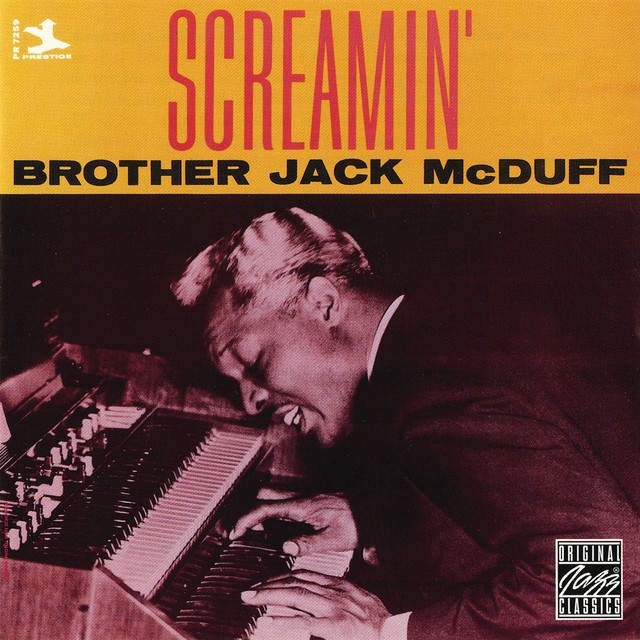
Brother Jack McDuff – Screamin’ (Prestige)
Many jazz organ greats came from Philadelphia, but Brother Jack McDuff, who started his career as a bassist, was born in Champaign, Illinois in 1926 (making him one of this year’s centennial celebrants.) Among McDuff’s trademarks was his skill at creating tight quartet arrangements that maximized the both power and entertainment value the jazz organ sound in a small group. His most famous mid-‘60s quartet included then-unknown guitarist George Benson and Chicago saxophonist Red Holloway as well as McDuff’s long time drummer Joe Dukes. Screamin' came just before that, in 1962, and includes guitarist Kenny Burrell and saxophonist Leo Wright with McDuff and Dukes, but the creative, fun and super tight arrangements are already in place. On the opening cut, a recasting of a 1940s R&B hit called “He’s a Real Gone Guy,” McDuff grabs your attention with a solo organ intro before the quartet snaps to attention – after that it’s off to the races. The atmospheric “Soulful Drums” will grab your attention too, in fact a number of radio deejays of that era used it as their theme music. On the frantic title cut, McDuff and company create serious excitement and there’s also deep blues (“After Hours”), a nice ballad (“I Cover the Waterfront”) and even a Basie classic (“One O’Clock Jump”) to emphasize the idea of jazz organ quartet as swinging big band.
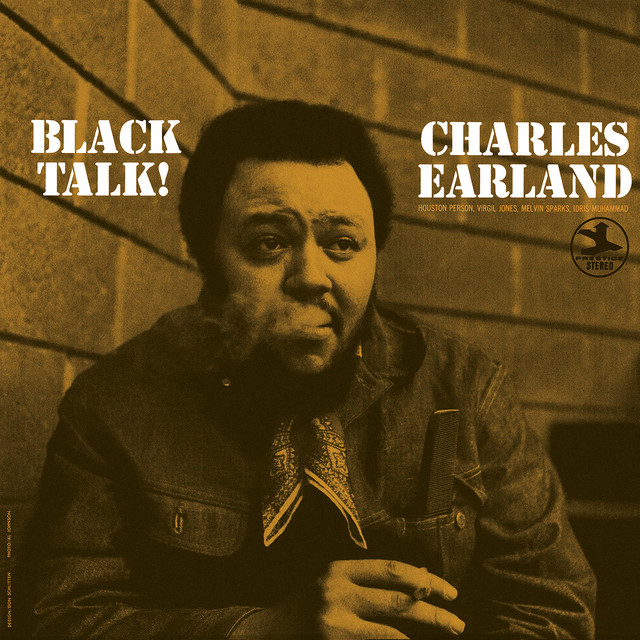
Charles Earland – Black Talk (Prestige)
Chicago audiences got to know Charles Earland’s high-spirited approach to organ jazz during his years here in the 1980s & ‘90s, but Earland was still a Philly guy when he recorded his breakthrough album in 1969. With the great Idris Muhammad anchoring the set on drums and soulful soloists like guitarist Melvin Sparks and saxophonist Houston Person, Earland was at the forefront of the next generation of organists who brought soul and funk more prominently into the jazz organ realm. On Black Talk you can hear the difference between what Earland was doing and the more swing, bop and blues styled organ group sounds that had come before. Earland was especially skilled at taking unlikely pop songs and turning them into soulful jazz anthems. His version of “Aquarius” has exciting solos along with a groove that doesn’t quit. His 11-minute version of “More Today Than Yesterday” made a current pop song into an instant jazz classic that you’ll still hear jazz organ groups play in the clubs today.


